Restocking of Sea trout
The release of Smolt
Smolt releases play an important supporting role in the conservation and restoration of aquatic ecosystems on Fyn and the surrounding islands. Decades of habitat degradation, barriers, and other human impacts have reduced the natural reproductive capacity of many watercourses, affecting sea trout populations in particular. By releasing smolts, Havørred Fyn helps strengthen sea trout stocks during a transitional period, ensuring a robust population for recreational angling while long-term restoration work continues in rivers and streams.
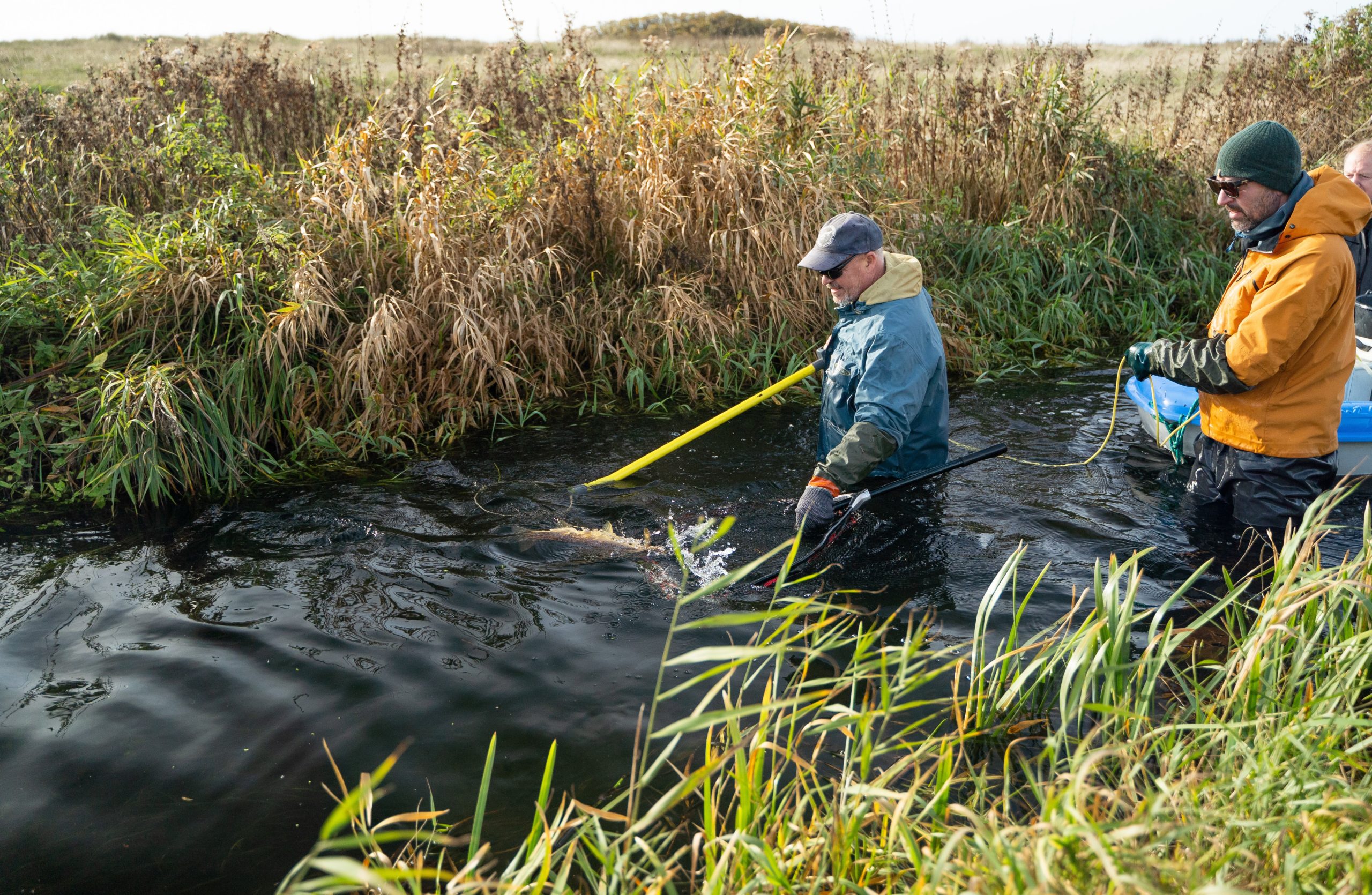
A key milestone in the Sea Trout Fyn project was reached in 2025, when the hatchery Fyns Laksefisk became part of Erhvervshus Fyn, placing it under the same organisational framework as Havørred Fyn. As part of the project’s management strategy, adult sea trout are collected through electrofishing in local watercourses during autumn. The fish are kept strictly separated according to their river of origin, ensuring that the smolts produced are later released back into the same areas where their parent fish were captured approximately 1.5 years earlier. This approach safeguards local genetic adaptations and follows a clear guiding principle: “Funen fish from Funen waters.”
Strong sea trout populations are about more than attractive fishing opportunities. They are a key indicator of healthy and well-functioning watercourses. Today, sea trout ascend around 25 watercourses on Fyn. To document this development and ensure that new fish passages function as intended, electronic fish counters have been installed at selected locations. These counters record timing, movement direction, and fish size, allowing population trends to be monitored accurately. The data shows that large numbers of sea trout now pass through restored watercourses to spawn, and surveys further upstream confirm increasing numbers of juvenile trout where barriers have been removed. Sea trout have returned to Fyn — supported by stocking in the short term and driven by restoration in the long term.
Stocking and Restoration Hand in Hand
Smolt releases play an important supporting role in the conservation and restoration of aquatic ecosystems on Fyn and the surrounding islands. Decades of habitat degradation, barriers, and other human impacts have reduced the natural reproductive capacity of many watercourses, affecting sea trout populations in particular. By releasing smolts, Havørred Fyn helps strengthen sea trout stocks during a transitional period, ensuring a robust population for recreational angling while long-term restoration work continues in rivers and streams.
A key milestone in the Sea Trout Fyn project was reached in 2025, when the hatchery Fyns Laksefisk became part of Erhvervshus Fyn, placing it under the same organisational framework as Havørred Fyn. As part of the project’s management strategy, adult sea trout are collected through electrofishing in local watercourses during autumn. The fish are kept strictly separated according to their river of origin, ensuring that the smolts produced are later released back into the same areas where their parent fish were captured approximately 1.5 years earlier. This approach safeguards local genetic adaptations and follows a clear guiding principle: “Funen fish from Funen waters.”
Strong sea trout populations are about more than attractive fishing opportunities. They are a key indicator of healthy and well-functioning watercourses. Today, sea trout ascend around 25 watercourses on Fyn. To document this development and ensure that new fish passages function as intended, electronic fish counters have been installed at selected locations. These counters record timing, movement direction, and fish size, allowing population trends to be monitored accurately. The data shows that large numbers of sea trout now pass through restored watercourses to spawn, and surveys further upstream confirm increasing numbers of juvenile trout where barriers have been removed. Sea trout have returned to Fyn — supported by stocking in the short term and driven by restoration in the long term.
Benefits for Funen’s aquatic life
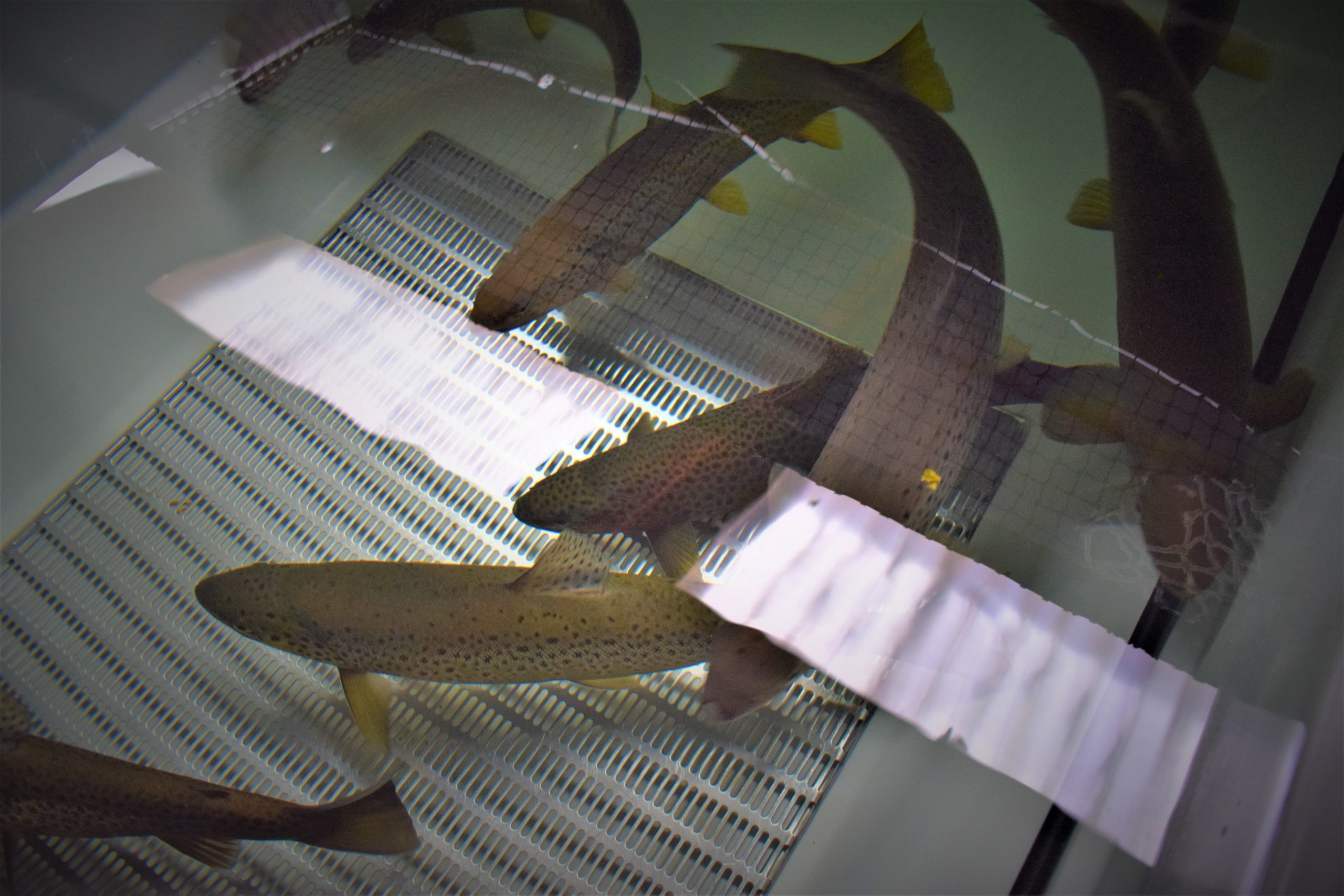
The release of smolts provides several important benefits for aquatic ecosystems on Fyn and the surrounding islands. One key aspect is the preservation of natural genetic diversity within sea trout populations. At Fyns Laksefisk, brood fish are selected in a way that closely mirrors natural conditions. Adult trout are collected from local watercourses using electrofishing, and fish of all sizes are included — not only the largest individuals with the highest egg production. This approach helps maintain natural genetic variation, which is essential for long-term survival, resilience, and adaptation to changing environmental conditions, just as in wild populations. At the same time, survival rates in the hatchery are significantly higher than in nature, allowing more fish to reach the smolt stage.
Sea trout also play a crucial ecological role far beyond their value to anglers. In rivers, streams, and coastal waters around Fyn, sea trout function as a keystone species and contribute to the balance of the entire ecosystem. As both predators and prey, they help regulate populations of smaller fish and invertebrates. After spawning, their nutrient-rich carcasses provide an important food source for other wildlife and contribute nutrients that support aquatic and riparian ecosystems. In this way, strong sea trout populations benefit not only the fishery, but the health and functioning of nature as a whole.
Socioeconomic Benefits of Smolt Releases
Beyond their ecological importance, smolt releases also have clear socioeconomic benefits for Fyn and the surrounding islands. Sea trout angling is a highly valued recreational activity that attracts anglers from both Denmark and abroad. Strong and stable fish populations help create high-quality fishing experiences, which in turn support tourism, generate local revenue, and benefit businesses connected to angling and outdoor recreation. At the same time, healthy rivers, streams, and coastal waters contribute to the overall quality of life for local communities, offering opportunities for nature-based activities and strengthening the connection between people and their natural surroundings.
Overall
Smolt releases on Fyn are an important part of a broader, long-term strategy to restore and conserve aquatic ecosystems. While stocking supports sea trout populations in the short term, the long-term objective remains clear: self-sustaining populations supported by healthy, well-functioning watercourses. By combining targeted smolt releases with extensive stream restoration and careful monitoring, Havørred Fyn works to strengthen both nature and recreational angling. This integrated approach benefits wildlife, local communities, and visitors alike — ensuring that Fyn’s rivers, coasts, and sea trout populations remain resilient and vibrant for generations to come.
What can I do?
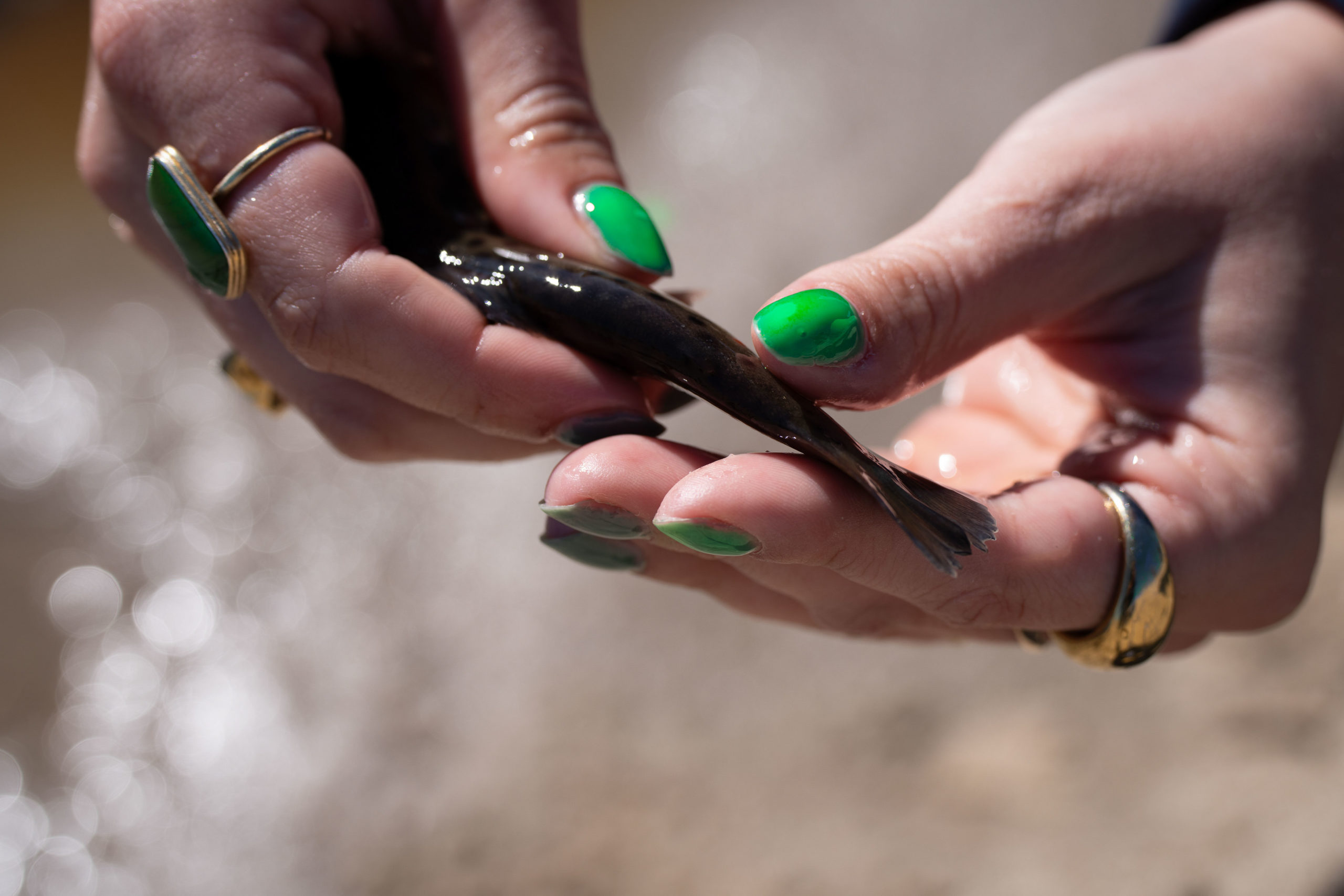
The fishing permit you purchase helps fund restocking efforts that support and strengthen sea trout populations on Fyn and in Denmark as a whole. Since spring 2023, all stocked trout smolts released on Fyn, Langeland and Ærø have been marked by removing their adipose fin — a method that allows anglers and researchers to distinguish stocked fish from wild trout. This large-scale marking experiment is part of a collaborative effort by Sea Trout Fyn, Fyns Laksefisk and DTU Aqua to better understand the effectiveness of smolt releases and improve future management.
By respecting minimum size limits, closed seasons and protected areas, and by acting considerately towards nature and other coastal visitors, you as an angler become an active part of a broader conservation process. We also encourage you to register your fishing trips and catches — including whether the fish you catch have an adipose fin or not — via the Fangstjournalen app. Reporting both catches and zero-catch trips provides valuable data that helps researchers monitor trends, evaluate the contribution of stocked fish to the fishery, and strengthen sea trout populations for the future.