The seasons - Winter
Winter: November - March
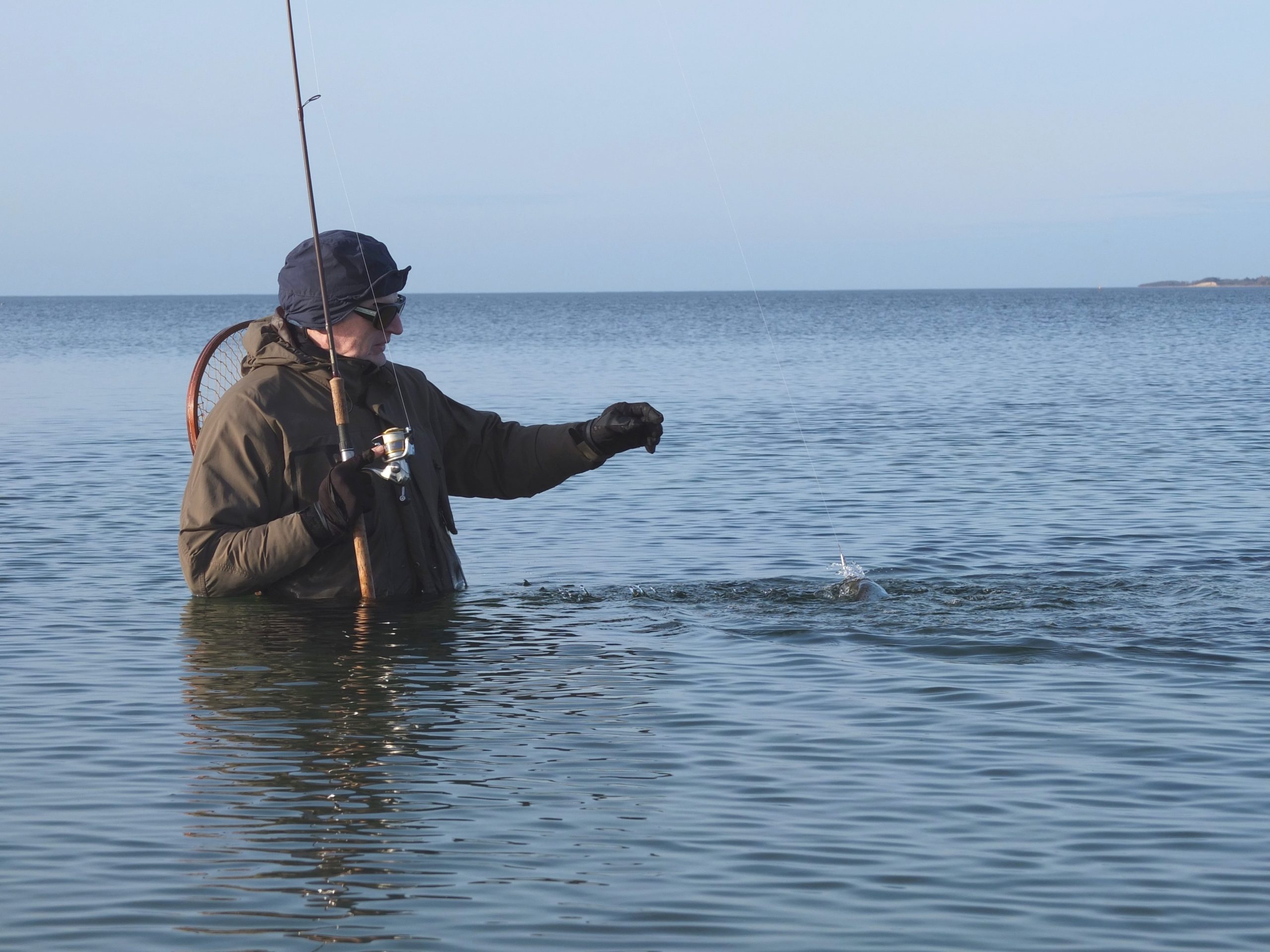
Winter sea trout fishing on Fyn, Langeland and Ærø can be hard and demanding. Cold water, changing weather and quiet coastlines mean fewer fish and fewer bites. On many days, you will have long stretches of shoreline completely to yourself.
But winter is also the season of opportunity. This is the time of year when truly large, silver sea trout move along the coast. For anglers willing to brave the cold and stay mobile, winter offers a rare chance of a genuine trophy fish. Success is never guaranteed — but when it happens, it is often unforgettable.
Where to Find the Fish
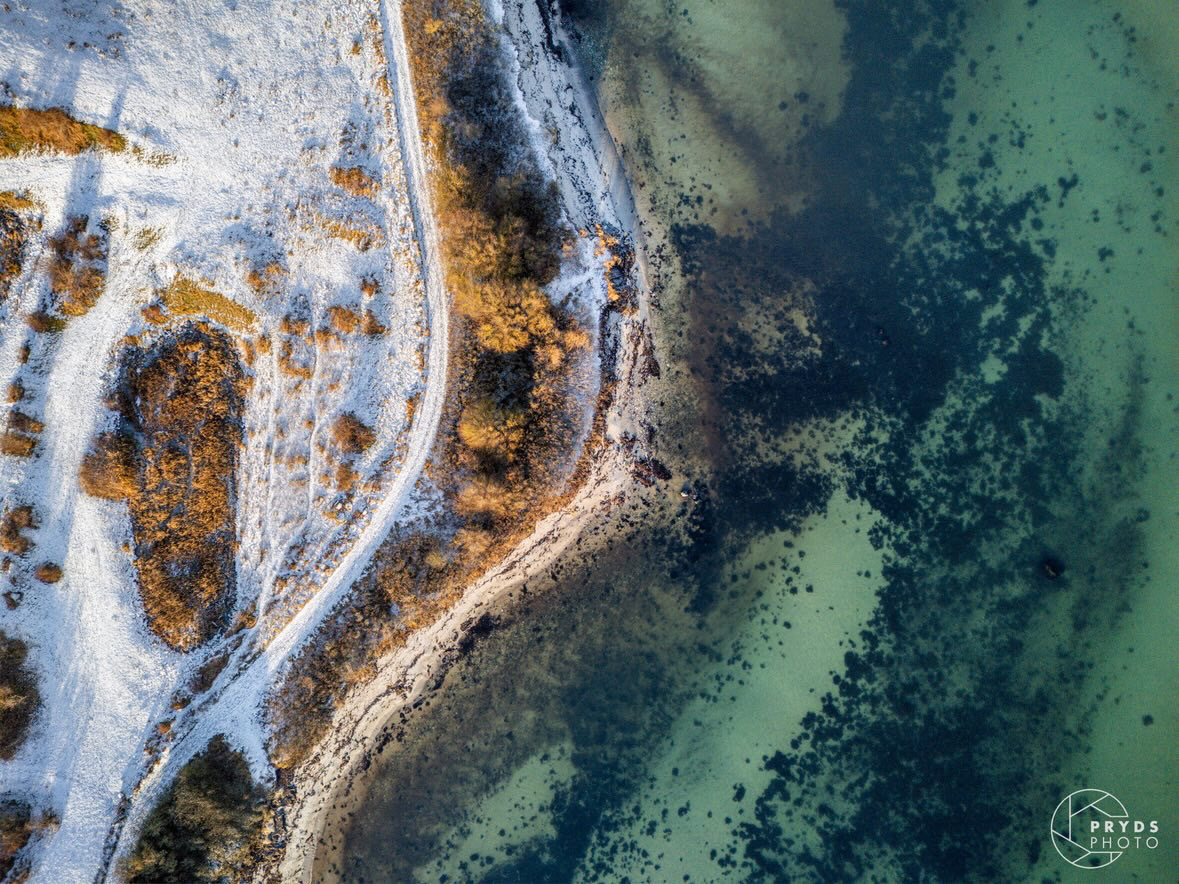
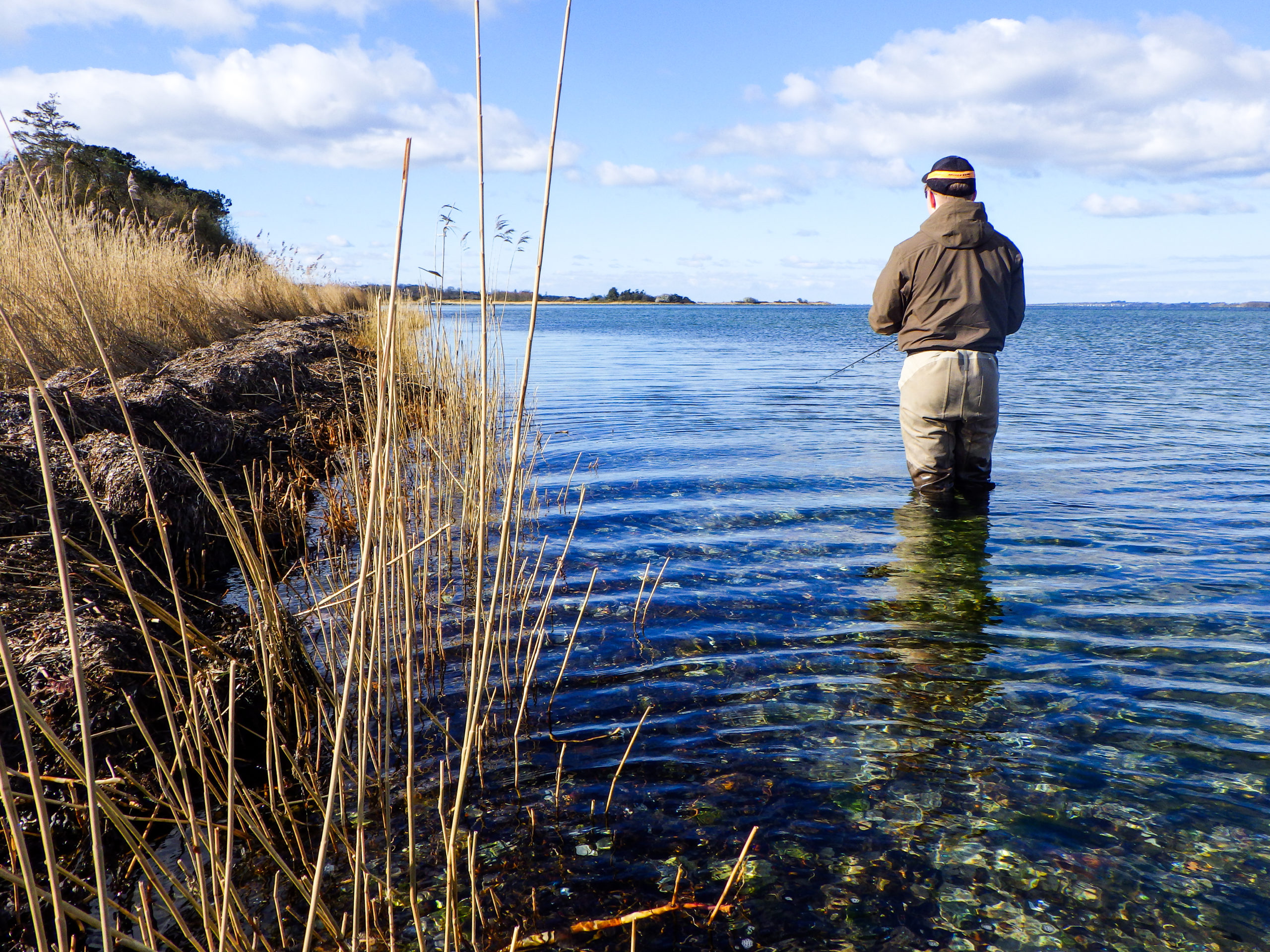
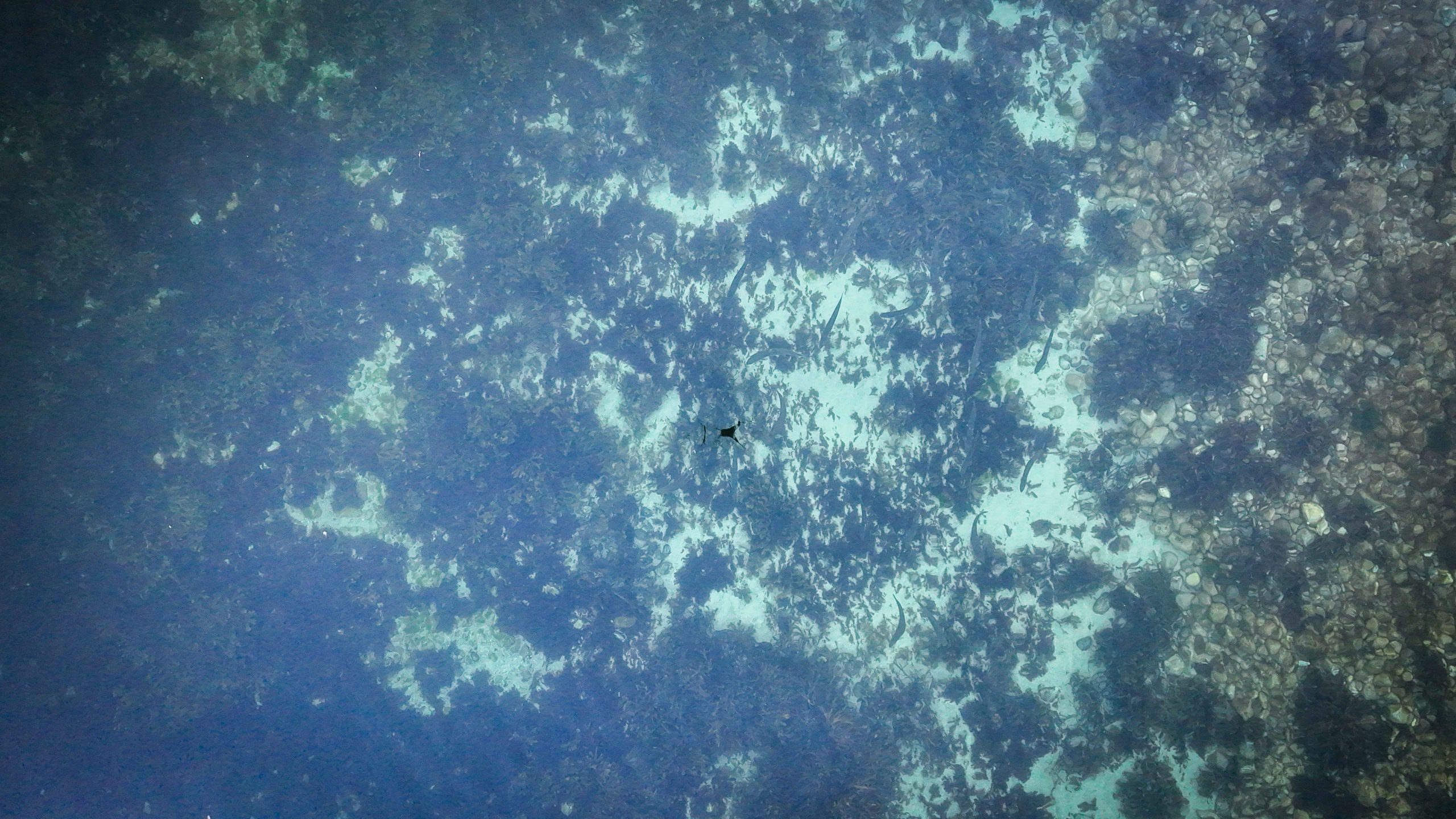
During winter, sea trout are often found close to the coast, where they search for food in cold, oxygen-rich water. Focus on shallow areas that warm slightly during the day, such as dark seabeds, protected bays and stretches of coastline with varied structure.
Points, reefs and areas with current are always worth attention, especially when they connect deeper water with shallow feeding grounds. On calm days, fish may patrol very close to shore, sometimes in less than a metre of water. Moving frequently and covering water is often more important than fishing one spot for a long time. A good tip is to bring a thermometer and monitor the water temperature. Areas with lower salinity can also be attractive to sea trout at this time of year.
In winter, observation is key. Look for signs of life such as baitfish, birds or subtle changes in water colour and depth. The fish are rarely everywhere — but when you find the right conditions, they are usually there for a reason.
What to Use – Fly and Spin
In winter, sea trout are often less active and respond best to subtle, slow presentations rather than fast or heavy gear. Whether you fish with spin or fly, the goal is to imitate natural prey in cold water and let the fish find the lure or fly without too much effort.
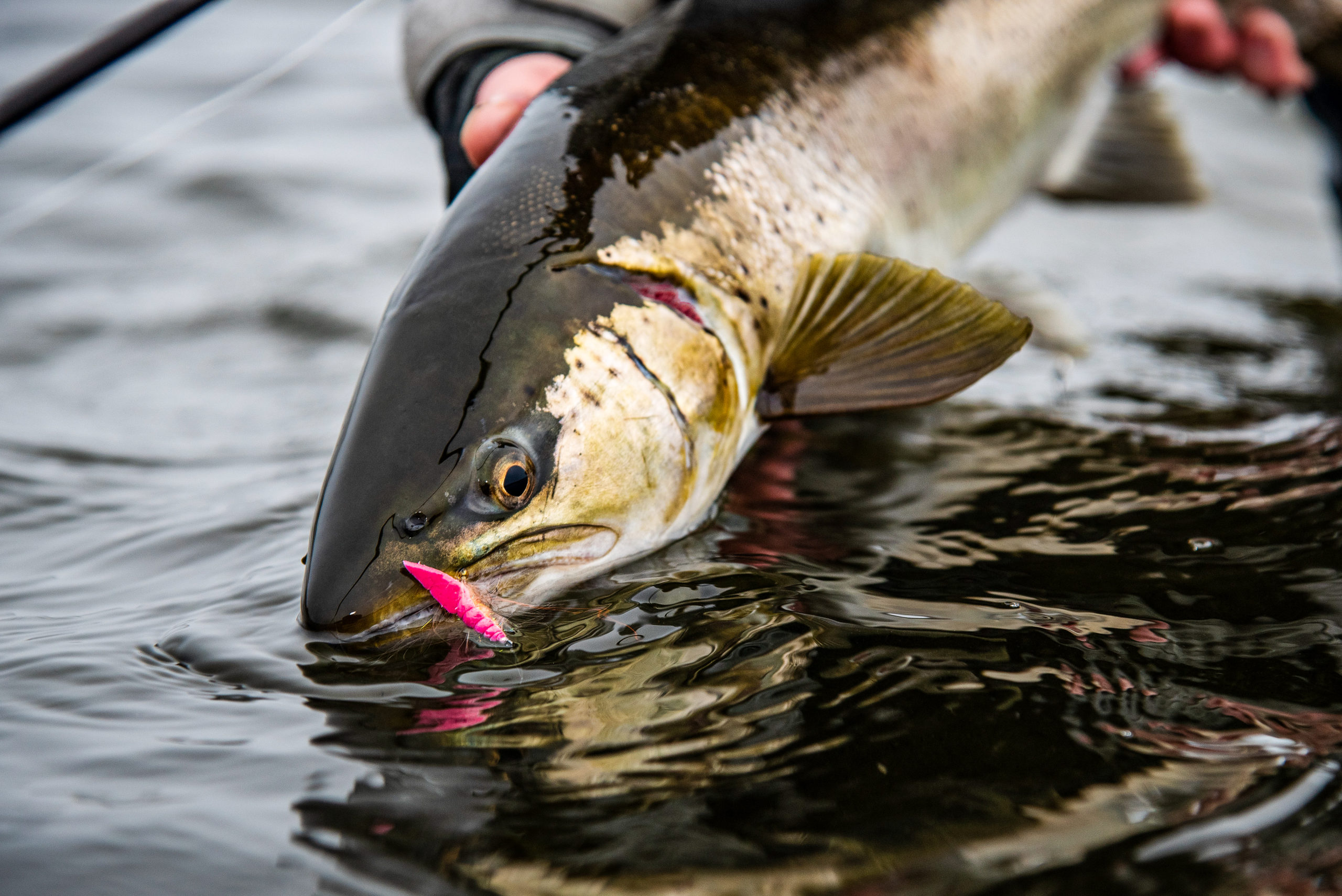
For spin fishing, lighter lures with a gentle action are usually more effective. Small spoons, micro-blades or soft plastics that can be worked slowly with pauses often trigger takes from inactive fish. In winter, more aggressive or high-contrast colours can also be very effective, especially in low light, stained water or on overcast days.
Fly anglers should choose small coastal patterns that imitate shrimp, worms or tiny baitfish, and fish them slowly with long pauses. Weighted flies or intermediate lines help reach the depth where winter trout often hold. Bright or contrasting colours can be a good choice in winter, as they make the fly easier for the fish to spot in cold, clear water.
In both fly and spin fishing, patience and subtlety are key. Slow presentations, frequent adjustments and careful reading of the conditions often make the difference during the winter season.
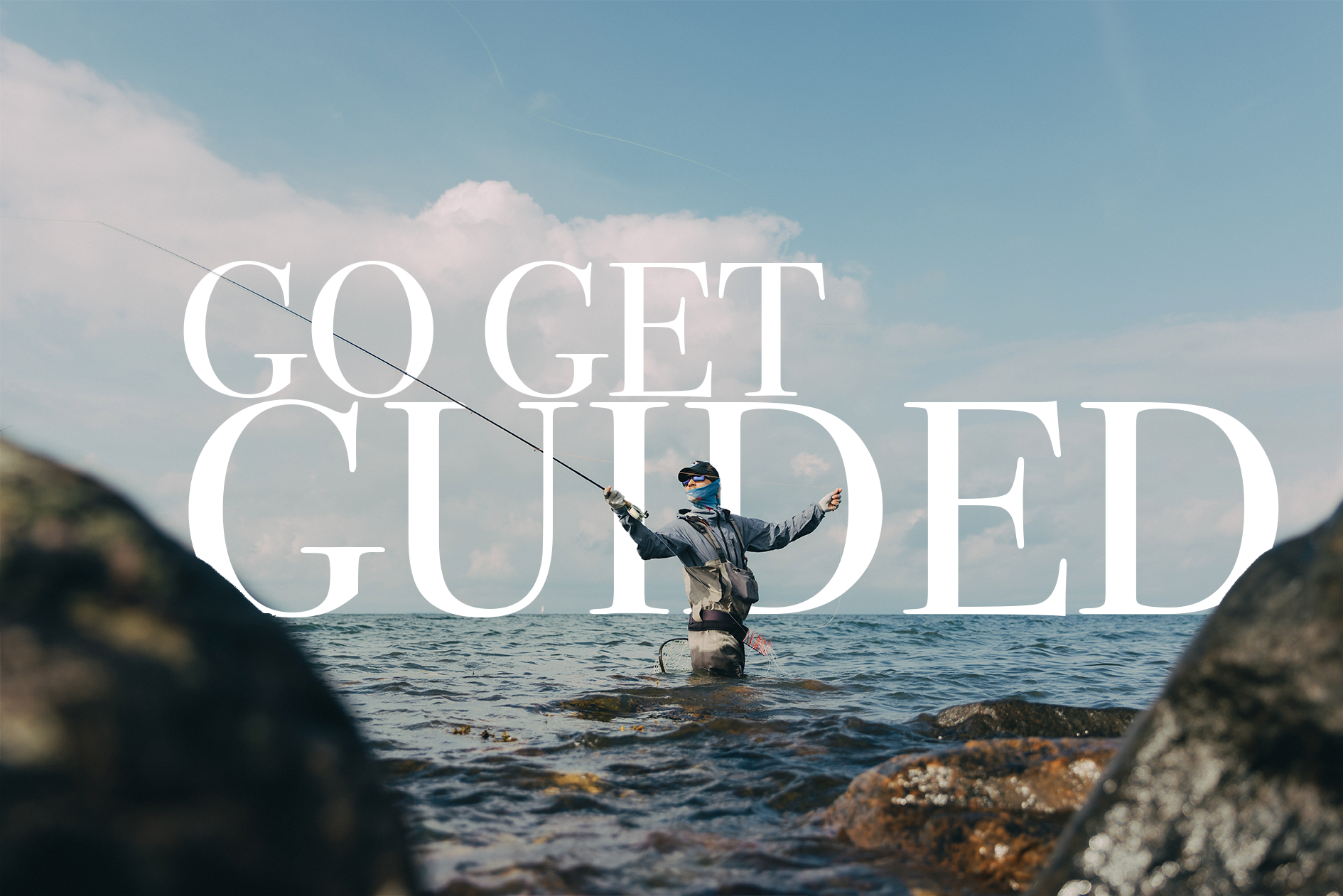
Book a local sea trout guide!
Fish with an experienced local guide and get the most out of your time on the coast. Learn the right techniques, fish the best spots, and adapt to conditions for a better sea trout experience on Fyn and the islands.
Get the best out of your stay!
Get the most out of your time on the water with an experienced local sea trout guide who knows the coast of Fyn inside out. Whether you are completely new to sea trout fishing or an experienced angler looking to refine your technique, our guides tailor the trip to your level, goals, and the conditions of the day.
You will fish the right spots at the right time, learn how to read wind, water temperature, and seasonal movements, and gain practical knowledge you can use long after the trip ends. Our guides focus on ethical, responsible fishing and share deep insights into sea trout behaviour, local habitats, and local fishing spots.